
What Is Peptide Therapy?
Peptide therapy is a broad treatment approach involving specific chains of amino acids called peptides. Peptides participate in many signaling processes throughout the body, but their functions, available evidence, and potential uses vary depending on the specific peptide.
At Quick Start Medical Weight Loss & Wellness, peptide therapy may be discussed as part of a personalized, provider-guided treatment plan for patients interested in goals related to energy, recovery, metabolic support, cognitive performance, hormone-related concerns, physical performance, and general wellness.
What Are Peptides?
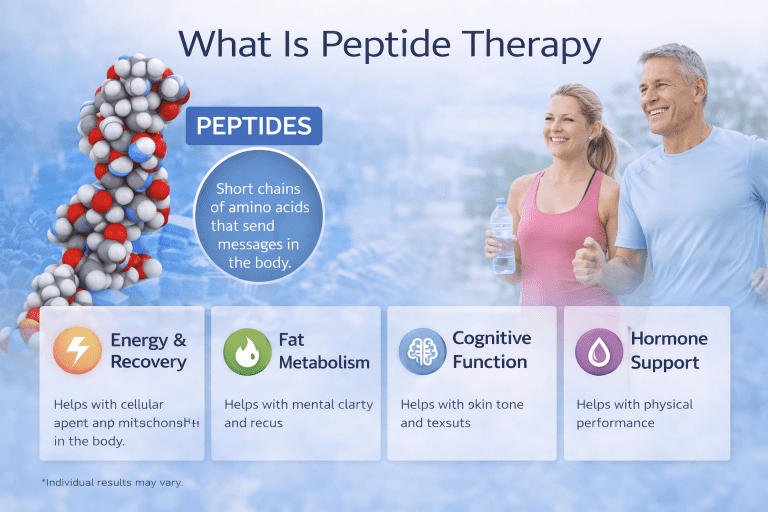
Peptides are short chains of amino acids that can act as signaling molecules within the body. Different peptides are involved in different biological processes, which means they are not interchangeable and do not all provide the same potential benefits.
Depending on the treatment, peptide therapy may involve supplementing a particular peptide or influencing specific signaling pathways. Any treatment recommendation should be based on the patient’s goals, medical history, current medications, health status, and the provider’s clinical judgment.
Vitamin and injection therapies may also be discussed when a provider determines that additional nutritional or wellness support may be appropriate. These therapies are separate from peptide treatment and should be recommended only after an individualized medical evaluation.
Why Patients Ask About Peptide Therapy
Patients are often interested in peptide therapy because they are looking for support with:
- Energy
- Recovery
- Fat metabolism
- Cognitive performance
- Hormone-related goals
- Sleep
- Physical performance
- Healthy aging
Peptide therapy is also commonly discussed as a wellness option for patients seeking broader support as they age.
Potential Benefits Patients Commonly Discuss
Patients may ask about a wide range of possible treatment goals, including:
- Increased muscle mass
- Improved skin elasticity
- Increased bone density
- Increased energy levels
- Improved skin tone and texture
- Faster metabolism
- Weight loss support
- Reduced fatigue
- Improved immune function
- Improved focus
- Better sleep
- Improved mood
- Increased sex drive
Because each peptide works differently, these should be viewed as potential treatment goals or discussion points rather than guaranteed results.
Treatment Overview
The selection of a peptide or combination of peptides is based on the patient’s health status, treatment goals, medical history, and the provider’s clinical judgment. Any peptide included in a treatment plan will be identified and discussed with the patient as part of their care.
Some commonly discussed peptides and related wellness therapies include:
- NAD
- BPC-157
- CJC-1295
- Sermorelin
- Ipamorelin
- Thymosin Alpha-1
- Semax
- Selank
- MOTS-c
- PT-141
Other options may also be discussed when considered appropriate by the patient’s medical provider.
How Peptide Therapy May Be Used
Peptide therapy may be administered by injection under the skin or intramuscularly, depending on the specific treatment plan.
Treatment is customized to the individual rather than approached as a one-size-fits-all option. The method of administration, dosage, frequency, and duration of treatment will depend on the peptide being used and the patient’s medical needs.
Potential Treatment Goals
Depending on the peptide and the patient’s individual treatment plan, areas of interest may include:
- Improved immune function
- Enhanced healing and recovery
- Increased fat metabolism
- Improved sleep and cognitive function
- Hormone regulation
- Better physical performance and endurance
- Additional benefits based on the peptide used
Provider guidance is essential because different peptides are used for different purposes. The most appropriate option depends on the patient’s goals, health history, current medications, and medical evaluation.
Potential Risks and Side Effects
As with any medical therapy, peptide treatment may carry risks and side effects. Patients should report any concerning symptoms or reactions to their medical provider right away.
Possible side effects may include:
- Redness, irritation, or pain at the injection site
- Headache, nausea, or dizziness
- Water retention
- Fatigue or changes in mood
- Changes in blood pressure or blood sugar
- Allergic reactions
- Flu-like symptoms
Individual responses can vary. These potential risks are one reason peptide therapy should be personalized and medically supervised.
Contraindications
Peptide therapy may not be recommended for individuals with:
- Active cancer or a history of hormone-sensitive cancer
- Pregnancy or breastfeeding
- Plans to become pregnant
- Known allergies to ingredients in the peptide formulation
- Uncontrolled chronic medical conditions without medical clearance
Additional concerns or contraindications may be identified during the provider’s medical review.
Important Safety Considerations
Peptide therapy is a broad category, and not every peptide has the same level of clinical evidence, safety information, or regulatory status.
Compounded medications are not FDA-approved. This means the FDA does not review or verify their safety, effectiveness, or quality before they are marketed.
The FDA has also published safety concerns regarding several peptide substances, including CJC-1295, Ipamorelin acetate, MOTS-c, Selank acetate, and Thymosin Alpha-1. Available human safety information may be limited for certain substances and methods of administration.
Patients should discuss the potential benefits, risks, available evidence, regulatory status, and alternative treatment options with a qualified medical provider before beginning therapy.
Is Peptide Therapy Right for You?
Peptide therapy may be worth discussing if you are interested in a provider-guided treatment plan focused on recovery, energy, metabolic support, hormone-related goals, physical performance, or general wellness.
The best first step is a medical consultation. During your visit, your provider can review your goals, health history, medications, and overall medical condition to determine whether peptide therapy may be appropriate for you.
Peptide Therapy in Pace, Florida
Quick Start Medical Weight Loss & Wellness provides personalized consultations for patients interested in learning more about peptide therapy and other wellness treatment options.
A personalized evaluation can help determine which options, if any, may be appropriate based on your goals and medical needs.
Ready to get started? Schedule a consultation with Quick Start Medical Weight Loss & Wellness to discuss whether peptide therapy may be right for you.
Disclosure Statement
The information provided on this page is intended for educational purposes only and should not be considered medical advice.
Information regarding dietary supplements, wellness products, medications, or injections may or may not have been evaluated by the FDA. These products and treatments are not intended to diagnose, treat, cure, or prevent any disease or health condition unless specifically approved for that purpose.
Treatment results vary, and no outcome can be guaranteed. All medications, supplements, and wellness treatments should be used only under the guidance of a qualified medical provider. Use of any product or treatment carries potential risks and is undertaken at the patient’s discretion following consultation with their provider.