
Many Florida patients want to know whether they can get weight loss medication through telemedicine. The answer depends on the patient, the provider’s medical judgment, the medication being considered, and whether telemedicine is appropriate for that person’s situation.
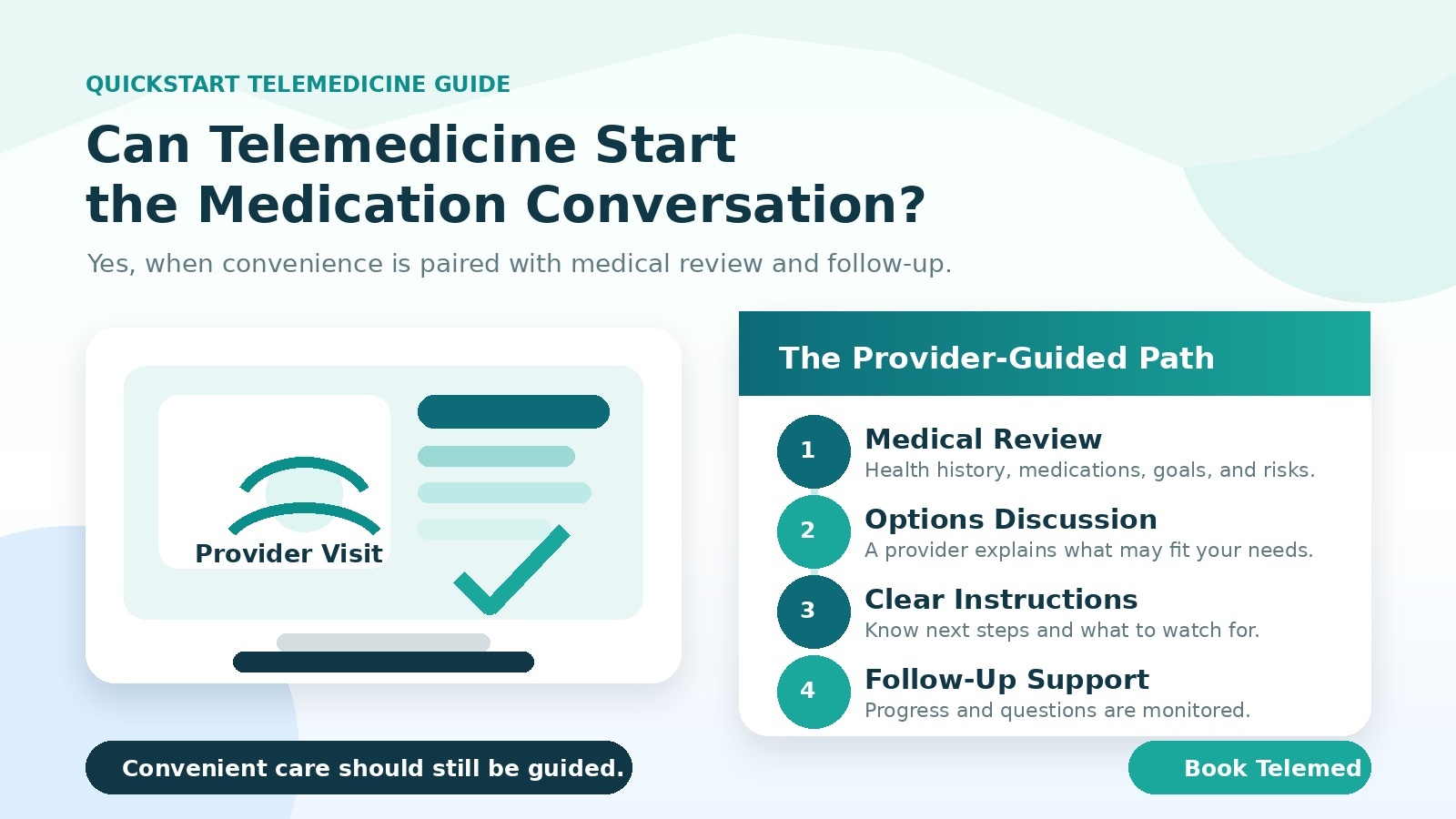
A telemedicine visit can be a convenient way to start the conversation, but it should still include a real medical evaluation. Weight loss medications are not right for everyone, and the safest plan starts with a provider reviewing the patient’s health history, goals, current medications, and potential risk factors.
What weight loss medication options may be discussed?
During a provider-guided visit, patients may be able to discuss GLP medications, appetite support options, metabolic health, previous weight loss attempts, side effects, and what type of treatment plan may be appropriate. Some patients may also ask about injection options, tablet options, or combination wellness support.
For patients researching GLP medications, it is important to understand that approved medications, compounded medications, and products advertised online are not all the same. Patients should ask where medication comes from, how dosing is determined, and what follow-up support is included.
Why a provider evaluation matters first
Before recommending medication, a provider may need to understand current weight, health conditions, medications, allergies, pregnancy status when relevant, digestive concerns, blood sugar history, blood pressure, and other factors. These details help determine whether a medication conversation is appropriate and what monitoring may be needed.
A provider evaluation also helps patients avoid unsafe shortcuts. Medication should not be treated like a simple online order. Patients need clear instructions, realistic expectations, and a follow-up plan.
What information should patients prepare?
Before a telemedicine appointment, patients should be ready to discuss:
- Current weight and goal weight
- Medical history and current diagnoses
- Current prescriptions and supplements
- Previous weight loss medications or programs tried
- Known allergies or medication reactions
- Recent lab results, if available
- Questions about side effects, dosing, cost, and follow-up
Having this information ready can make the visit more productive and help the provider make safer, more personalized recommendations.
Telemedicine is not the same as buying medication online
A common mistake is confusing telemedicine with “ordering diet medication online.” A legitimate telemedicine visit should involve a provider-patient relationship, medical review, treatment discussion, clear instructions, and follow-up.
If a website promises medication without a real evaluation, patients should be cautious. The FDA has raised concerns about unapproved GLP-1 products, compounded products, and dosing errors. This is why provider guidance matters.
What follow-up may look like
Weight loss medication plans often require follow-up to monitor progress, side effects, tolerance, and next steps. Patients may need dose adjustments, lifestyle support, lab review, or a change in plan depending on how they respond.
Follow-up also gives patients a chance to ask questions and address concerns before small issues become bigger problems.
How QuickStart helps
QuickStart gives Florida patients an easier way to begin a provider-guided weight loss conversation. Whether care begins virtually or in the office, the focus is on helping patients understand their options and choose a plan that is medically appropriate.
Instead of guessing from online ads or trying to compare medication options alone, patients can start with a consultation and get guidance based on their health history, goals, and needs.
Call to action: Want to know whether telemedicine weight loss medication options may be right for you? Schedule a QuickStart consultation.
Suggested FAQ Questions
Can I start medical weight loss through telemedicine in Florida?
Many patients can begin the conversation through telemedicine. Whether medication or a specific treatment plan is appropriate depends on the patient’s health history, provider evaluation, and any additional requirements needed for care.
Do I need labs before starting?
Some patients may need lab work before beginning or continuing a medical weight loss plan. The provider will determine what is needed based on the patient’s history and treatment options.
Can telemedicine patients receive follow-up care?
Yes. Telemedicine can be used for follow-up care when appropriate. Follow-up visits may help monitor progress, review side effects, answer questions, and adjust the plan if needed.
Is every patient eligible for telemedicine?
No. Some patients may need an in-person visit, labs, additional medical clearance, or a different recommendation. The provider will determine whether telemedicine is appropriate.
Source / Review Notes
- Florida Health Source: Florida Telehealth standards
- FDA: FDA’s Concerns with Unapproved GLP-1 Drugs Used for Weight Loss