
Searching for diet pills online can feel overwhelming. One website promises fast results. Another advertises easy access. A third makes it sound like weight loss is as simple as placing an order. But appetite, metabolism, weight history, medications, and health risks are personal. That is why provider-guided appetite support is different.
At QuickStart Medical Weight Loss & Wellness Center, the goal is not to hand every patient the same solution. The goal is to understand what is going on, what has been tried before, and what type of support may be appropriate.
Why patients search for diet pills online
Many patients search online because they feel stuck. They may be tired of losing and regaining weight, struggling with cravings, dealing with low energy, or feeling frustrated by plans that worked for someone else but not for them.
Those feelings are real. But the solution should still be safe, personalized, and medically appropriate.
The problem with one-size-fits-all weight loss products
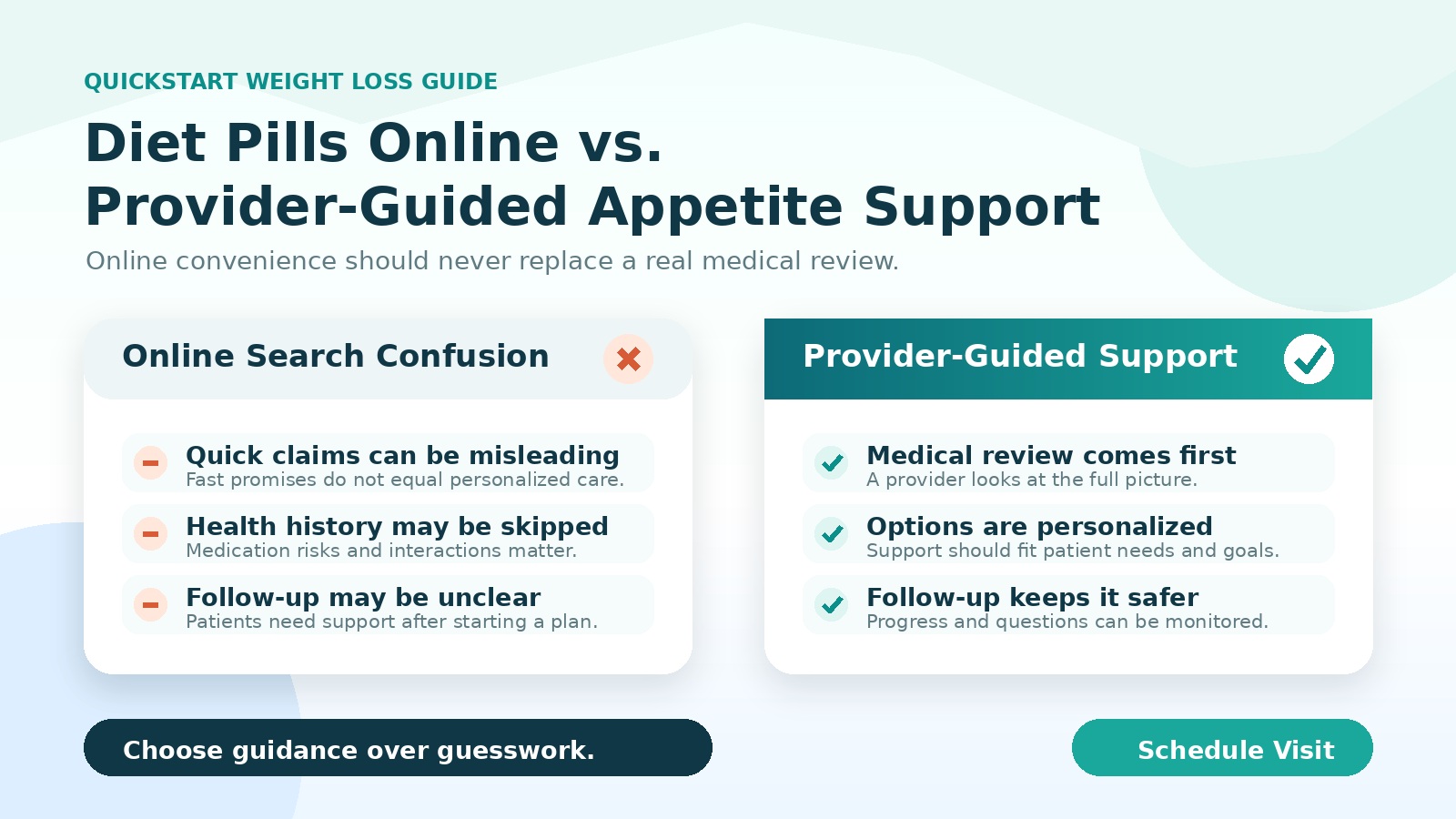
Online products often focus on convenience and quick claims. What they may not provide is a full review of health history, medication interactions, blood pressure concerns, side effects, or follow-up.
Patients may also be unsure whether a product is legitimate, properly sourced, or appropriate for their needs. The FDA encourages patients to be cautious when buying medicine online and to use safe online pharmacy resources before trusting a website.
What is provider-guided appetite support?
Provider-guided appetite support means a medical provider reviews the patient’s situation before discussing options. The conversation may include hunger patterns, cravings, portion control, emotional eating, sleep, stress, previous medication use, and medical conditions that may affect weight.
For some patients, medication may be part of a plan. For others, nutrition changes, behavior support, metabolic evaluation, or a different approach may be recommended.
Questions to ask before taking any appetite or weight loss medication
Before taking any appetite or weight loss medication, patients should ask:
- Is this product prescribed by a licensed medical provider?
- Has my health history been reviewed?
- Could this interact with medications I already take?
- What side effects should I watch for?
- What happens if it does not work for me?
- Who do I contact with questions?
- Is there a follow-up plan?
These questions matter because weight loss medication should not be treated like a simple online purchase. It should be part of a larger plan that considers the patient’s health, goals, and safety.
Weight loss should not feel like guesswork
A good weight loss plan should help patients understand what they are doing and why. It should also include realistic expectations.
Medication, when appropriate, is not a substitute for follow-up, nutrition, hydration, movement, and sustainable habits. It is one possible tool within a provider-guided plan.
How QuickStart can help
QuickStart helps patients move from internet confusion to a provider-guided plan. Whether a patient is asking about appetite support, GLP options, telemedicine weight loss, or next steps after previous weight loss attempts, the first step is a conversation.
Instead of guessing which online product is safe or appropriate, patients can meet with a provider who can review their history, answer questions, and discuss options that may fit their needs.
Call to action: Before choosing diet pills online, schedule a provider-guided weight loss consultation with QuickStart.
Suggested FAQ Questions
Is it safe to buy diet pills online?
Patients should be cautious when buying diet pills or weight loss medication online. Some websites may sell products without a proper medical evaluation or prescription. A safer approach is to work with a licensed provider who can review your health history first.
What is provider-guided appetite support?
Provider-guided appetite support means a medical provider reviews your health history, goals, cravings, hunger patterns, medications, and possible risk factors before discussing options that may be appropriate.
Do I need a medical visit first?
Yes. A medical visit helps determine whether appetite support, medication, lifestyle changes, lab work, or another treatment path may be appropriate. Not every patient is a candidate for every option.
What if I have tried diet medication before?
Tell your provider what you have tried, what helped, what did not work, and whether you had side effects. That information can help guide the next conversation and avoid repeating approaches that were not a good fit.
Source / Review Notes
- FDA BeSafeRx: online pharmacy safety guidance
- FDA: concerns with unapproved GLP-1 drugs used for weight loss
- FDA: dosing error concerns with compounded semaglutide products
Sources used for safety review: FDA BeSafeRx, FDA GLP-1 concerns, and FDA compounded semaglutide dosing alert.