
NAD therapy has become a popular wellness topic for patients interested in energy, recovery, focus, aging, and overall vitality. Many people hear about NAD online and wonder whether it could be a helpful addition to their wellness plan.
The answer depends on the patient. NAD therapy should be discussed with a qualified provider, especially for patients with medical conditions, current medications, or specific treatment goals.
At QuickStart Medical Weight Loss & Wellness Center, the goal is to help patients ask better questions, understand what may be appropriate, and set realistic expectations before beginning any wellness treatment.
What is NAD?
NAD stands for nicotinamide adenine dinucleotide, a compound involved in cellular energy processes. Because of its role in the body, NAD has become a topic of interest in wellness, performance, and healthy aging conversations.
That does not mean every patient needs NAD therapy or that every NAD product is the same. Route, dose, quality, health history, and expectations all matter.
Why patients ask about NAD therapy
Patients may ask about NAD therapy for several reasons, including:
- Low energy or fatigue concerns
- Recovery support after stress, travel, or intense schedules
- Interest in wellness injections or cellular health topics
- Support during weight loss or lifestyle changes
- Curiosity about healthy aging and vitality
- A desire to feel more supported during a broader wellness plan
These goals are common, but they should still be discussed in a medically guided way. NAD therapy should not be treated as a one-size-fits-all solution.
What NAD therapy should not promise
NAD therapy should not be marketed as a cure-all. Patients should be cautious of claims that promise guaranteed energy, disease treatment, dramatic anti-aging results, or instant transformation.
Wellness support should be honest, personalized, and realistic. Some patients may notice changes in how they feel, while others may not. A provider-guided conversation helps patients understand what is reasonable and what should not be promised.
What a provider-guided NAD conversation may include
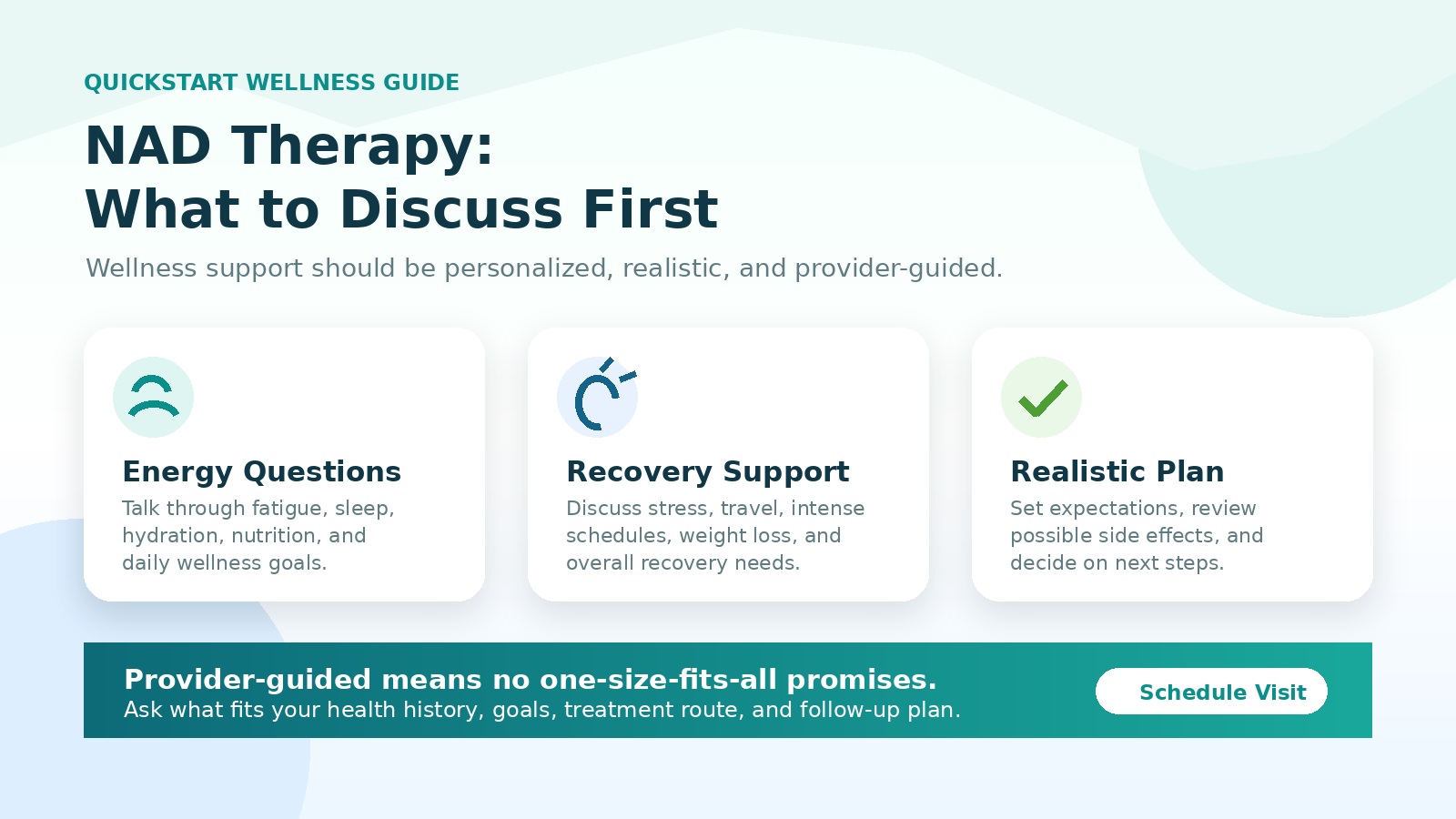
A provider may ask about energy levels, sleep, nutrition, medications, hydration, weight loss goals, medical history, and other wellness concerns.
The provider may also discuss whether NAD is appropriate, what to expect, what side effects may occur, and whether another option may be better suited to the patient’s goals.
How NAD may fit into a larger wellness plan
For some patients, NAD may be discussed alongside medical weight loss, peptide therapy, wellness injections, nutrition support, hydration, or aesthetics.
The goal is to create a plan that supports the whole patient, not just one symptom or one trend. A broader wellness plan may include nutrition, movement, sleep, hydration, stress support, and follow-up care.
Set realistic expectations
Patients respond differently to wellness therapies. Some may notice changes in how they feel; others may not. Follow-up and honest communication help determine whether the plan should continue, change, or stop.
Patients should also ask questions about the route of treatment, ingredients, sourcing, possible side effects, cost, and how NAD fits into their overall care plan.
How QuickStart can help
QuickStart helps patients explore wellness options like NAD therapy through a provider-guided process. Patients can ask questions, review goals, and understand what may be appropriate before beginning any treatment.
Instead of relying on online wellness claims, patients can start with a consultation and receive guidance based on their health history, lifestyle, and goals.
Call to action: Curious about NAD therapy? Schedule a QuickStart consultation to discuss whether it fits your wellness goals.
Suggested FAQ Questions
What is NAD therapy?
NAD therapy refers to wellness support involving nicotinamide adenine dinucleotide, a compound involved in cellular energy processes. Patients should talk with a provider to understand whether it may be appropriate for their goals.
Who may ask about NAD support?
Patients may ask about NAD support if they are interested in energy, recovery, wellness injections, healthy aging, or support during a larger medical weight loss or wellness plan.
Is NAD a cure-all?
No. NAD therapy should not be presented as a cure-all or guaranteed solution. Wellness treatments should be discussed with realistic expectations and medical guidance.
Can NAD be combined with a weight loss plan?
For some patients, NAD may be discussed as part of a broader wellness or medical weight loss plan. Whether it is appropriate depends on the patient’s health history, goals, provider recommendation, and available treatment options.
Source / Review Notes
- NIH Office of Dietary Supplements: NAD is the metabolically active coenzyme form connected to niacin activity.
- FDA: compounded products are not FDA-approved and are not reviewed for safety, effectiveness, or quality before marketing.
- QuickStart provider review required for exact NAD therapy route, claims, contraindications, side effects, and service availability.
Safety sources checked: FDA compounding guidance and NIH Office of Dietary Supplements NAD/niacin information.