
GLP medications are part of a newer generation of treatments used in medical weight loss and metabolic care. These therapies are designed to work with hormone pathways involved in appetite, fullness, digestion, blood sugar regulation, and energy balance. At Quick Start Medical Weight Loss & Wellness, patients often ask about the difference between single-pathway GLP-1 medications, dual-pathway options, and newer triple-pathway therapies. The clinic labels these options as QS-GLP1-S, QS-GLP2-T, and QS-GLP3-R.
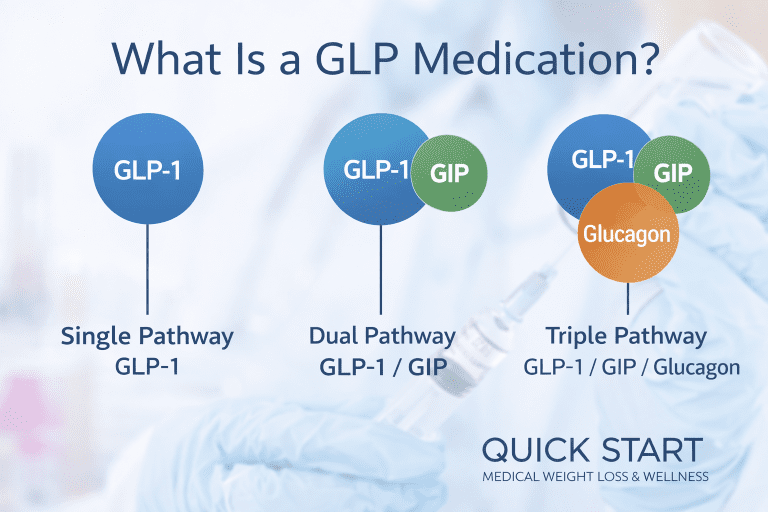
Understanding the Three Main GLP Categories
The three main generations of GLP-based therapies differ primarily in the number of hormone receptors they target and how broadly they may affect appetite and metabolism. In simple terms, treatment has progressed from targeting one receptor to two and now to three. That is why many patients hear providers talk about single agonists, dual agonists, and triple agonists when discussing weight loss support.
Single Pathway GLP-1 Medications
Single-pathway GLP-1 medications mimic the glucagon-like peptide-1 hormone. They work by slowing digestion, signaling the brain that you are full, helping the pancreas release insulin, and reducing appetite. These are often the medications people first think of when they hear about GLP treatment.
Examples commonly discussed in this category include semaglutide and liraglutide. In studies, single-pathway GLP-1 medications have commonly been associated with meaningful weight loss, often in the range of about 5 to 15 percent of body weight, depending on the patient and treatment plan.
At Quick Start, this single-pathway category is labeled: QS-GLP1-S Peptide
Dual Pathway GLP-1 and GIP Medications
Dual-pathway medications activate both GLP-1 and GIP receptors. This is often described as a broader metabolic approach because it combines appetite support with additional signaling that may help with fat metabolism and less fat storage.
Tirzepatide is the best-known medication in this category. Dual agonists have drawn attention because studies have shown higher average weight loss than single-pathway GLP-1 options alone, with some results reaching 20 percent or more in certain study groups. The attached clinic draft also notes that this category is viewed as more effective for weight loss than single-pathway GLP-1 options.
At Quick Start, this dual-pathway category is labeled: QS-GLP2-T Peptide
Triple Pathway GLP-1 GIP and Glucagon Medications
Triple-pathway medications are designed to target three receptors at once: GLP-1, GIP, and glucagon. This is why they are often viewed as a next-generation option in obesity and metabolic research. The addition of glucagon is important because it may support energy expenditure and metabolism in addition to appetite control.
Retatrutide is the best-known medication in this category. Early study results created strong interest because they showed significant weight-loss potential and promising cardiometabolic effects. The clinic draft highlights findings such as improved blood sugar, reduced triglycerides, and better blood pressure trends, along with reported benefits for obesity-related knee pain in some study participants.
At Quick Start, this triple-pathway category is labeled: QS-GLP3-R Peptide
Because this category is still emerging, it should be described carefully. Retatrutide is investigational and is not yet FDA approved for public use.
How the Categories Compare
Here is the easiest way to understand the progression:
- GLP-1 compounds such as semaglutide activate one primary metabolic pathway
- Dual incretin compounds such as tirzepatide activate two pathways for broader metabolic signaling
- Triple agonists such as retatrutide activate three pathways at once and represent an emerging area of research
This is why many patients hear that weight loss efficacy has generally progressed in this order:
Triple Agonist > Dual Agonist > Single GLP-1
That does not mean one option is automatically right for everyone. It means the conversation has become more advanced, and treatment decisions should be guided by your provider, your goals, and your medical history.
Why Patients Are Interested in Triple Pathway Research
Patients are especially interested in triple-pathway research because it combines appetite control with broader metabolic activity. In the attached clinic draft, retatrutide is described as a next-generation option because of its triple-action mechanism, its once-weekly dosing, and strong study results in weight loss and related metabolic markers.
For a live website page, the most important takeaway is this: triple-pathway therapies are exciting, but they are still part of an evolving research category and should be discussed with clear expectations and provider guidance. Retatrutide remains investigational.
Common Side Effects to Know
Across these categories, the most commonly discussed side effects are gastrointestinal. Patients may experience nausea, diarrhea, constipation, vomiting, stomach discomfort, or feeling overly full, especially when first starting treatment or increasing the dose. The clinic draft also notes that higher doses of dual and triple agonists may sometimes come with greater side-effect intensity.
This is one reason medical supervision matters. The right plan is not only about choosing a medication. It is also about choosing the right dose, pace, and follow-up.
Bringing It All Together
If you think of your metabolic system like a communication network, single-pathway GLP-1 medications send one major appetite and blood sugar signal, dual-pathway medications send two, and triple-pathway medications activate three pathways at once. That broader signaling is why these treatments continue to be such a major area of research and discussion in medical weight loss.
GLP Medication Support in Pace FL
If you are exploring GLP-based treatment options, the best next step is a consultation with Quick Start Medical Weight Loss & Wellness. Your provider can review your goals, your medical history, and whether a single-pathway, dual-pathway, or emerging triple-pathway option makes the most sense for your plan.
Ready to get started? Schedule a consultation with Quick Start Medical Weight Loss & Wellness to learn which GLP option may be the best fit for your goals.